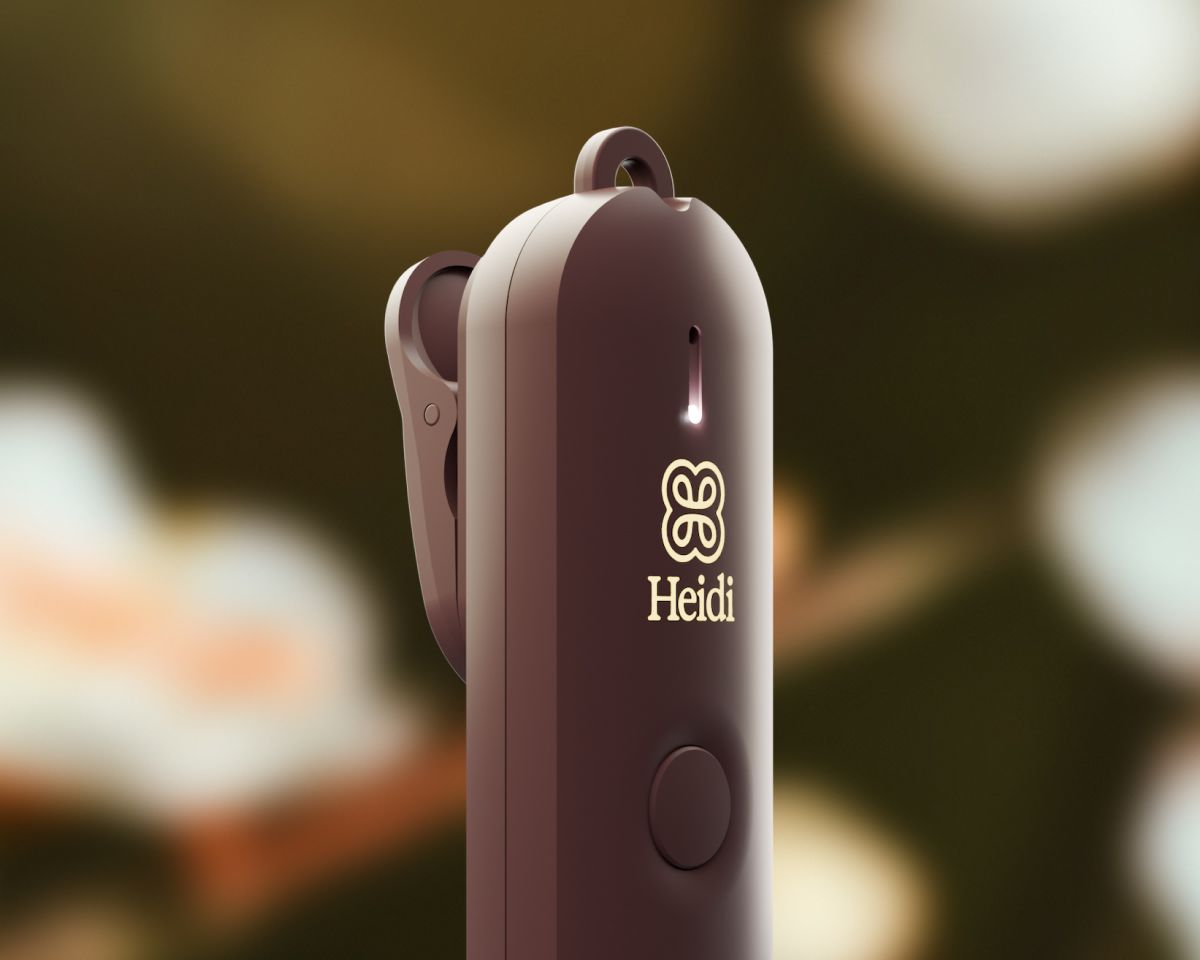
Ambient scribe startups are bullish about their data. Pressured by Epic’s cornering of the ambient AI market, scribal startups like Abridge and Heidi are moving their platforms away from ambient scribing towards a holistic model servicing all stages of the care experience. Both lean on their comparative advantage: as stewards of raw patient conversations, Abridge and Heidi are betting they can develop effective domain-limited models, in-house. OpenEvidence and Doximity are following suit.
Abridge calls it a “clinical conversation foundation model” for a new generation of AI. Claiming that its in-house data provides a completely neutral infrastructure for clinical AI, Abridge thinks it's capable of navigating all of the “complexity of healthcare and all of the workflows” (Abridge, in June, partnered with NVIDIA to build open-source clinical AI models). Last month, Heidi launched Heidi II, adding agents, memory, and administrative work to its platform. Heidi CEO Thomas Kelly calls it “the culmination” of the company’s mission.
CHARGE's July prediction confirmed
CHARGE calls it risk. In July, CHARGE sounded the alarm: Ambient scribes can generate incorrect or flawed transcriptions of clinical conversations. In a vacuum, some flawed transcriptions may be tolerable. As the basis for a holistic care experience, however, those flawed transcriptions are transmuted from error artifacts into the foundation of an entire health infrastructure.
Last week, a research consortium based in King’s College quantified the risk, and the results are alarming. Of 8 AVT (ambient voice technology) systems investigated by the researchers – including Heidi, Dragon Medical One, Amazon Medical Transcribe, and GPT4oTranscribe) – all returned clinically significant errors. GPT4o scored the lowest at a 30% error rate (a mode which is still intolerably high). Heidi delivered dangerous errors in 54% of transcripts. Microsoft’s Dragon returned errors 68% of the time.
Direct patient risk
Across all applications, 31% of health systems have encountered a faulty AI output, and over 9% have confirmed AI errors that affect patients directly. The research, published in the Journal of Medical Systems makes the risk of ambient AI to patients clear: errors were observed in association with laboratory results (30.4% incident rate); patient history (17.9%); operative detail (16.1%); and medication type and dosage (13.2%). Each of those error modes represents an independent, highly dangerous risk surface directly affecting patients.
The risk, however, is not only immediate. Heidi I fails 54% of the time. Heidi II, then, launched as the “culmination” of a model that errs more frequently than it functions. That paradigm is not limited to Heidi – rather, all holistic care solutions launched by AVT startups risk fossilizing massive error modes. Each fossilized error mode may replicate patient risk for every AI output, every pre-visit note, every suggested discussion topic and every post-visit summary.
CHAIRs (the Council for Healthcare AI Responsibility and Safety) recently reported that while no organization conducts manual review of more than 5% of AI use cases, 96% rely on (often AI-generated) clinical notes for assessing patient interactions. Instead of trusting vendor hype, industry professionals should keep an eye on the opaque AIs they employ.
References
[1] https://link.springer.com/article/10.1007/s10916-026-02471-5