In July, CHARGE posed a simple question: what is UpDoc, and why won’t its CEO provide a straight answer? UpDoc had claimed that it obtained FDA clearance as the “first Software as a Medical Device (SaMD) that uses patient-facing large language models.” In response, we noted that UpDoc’s clinical support was actually, according to the FDA files, a rules-based, deterministic system. CHARGE branded it an “AI Alexa.”
When pressed, Vakili refused to clarify the actual function of UpDoc’s AI because he didn’t want to reveal their “regulatory strategy.” He did, however, assure third parties that the technology was “way more complicated than anybody is understanding” and that the “company would reveal more in the future.”
Three months later, we’re still waiting for any sort of clarification.
A massive grant
In its absence, however, we’ve been ceremoniously delivered more historic UpDoc breakthroughs. On September 9, the startup was named among the lead performers for a massive financial grant awarded by the Advanced Research Projects Agency for Health’s (ARPA-H) Agentic AI-Enabled Cardiovascular Care Transformation (ADVOCATE) program.
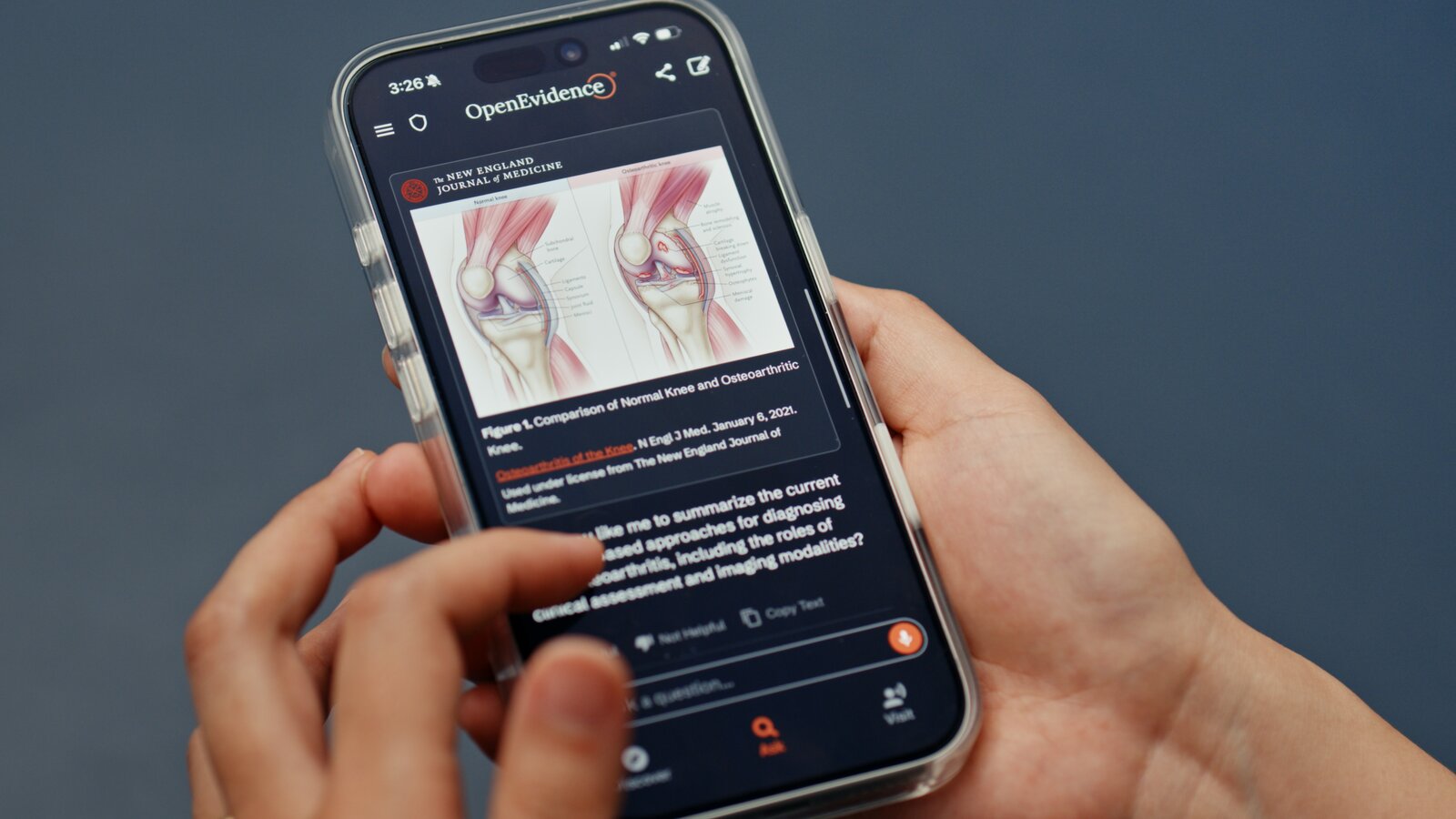
Through ADVOCATE, ARPA-H has committed $62.7 million to develop artificial intelligence bots that manage detection and treatment of heart failure. New AI tools aimed at detecting heart failure in EKGs have flooded the market. Just this week, the FDA granted rare de novo clearance for Powerful Medical’s Queen of Hearts; CHARGE previously commented on EchoNext, a competitor riskily integrated by OpenEvidence.
The ARPA-H has directed ADVOCATE funding towards a powerful consortium of university researchers and startups, among them Atman Health ($7.8 million), Tempus AI ($9.5 million), and, of course, UpDoc ($9.2 million).
What's UpDoc?
Why UpDoc? The answer to the “why” is pretty clear. ARPA-H granted UpDoc $9.2 million to “develop clinical AI agents” trusted to “autonomously manage heart failure.” Whereas Atman and Tempus have both developed AI models tailored for cardiovascular disease management specifically, UpDoc helps patients manage their blood sugar. Its relevance for the ADVOCATE program rides the coattails of its claim to be the “realization of Clinical AI’s potential” – with the funding UpDoc will “lay the foundation for a future general-purpose clinical AI platform.”
That ambition is precisely why the “what” still matters. Let’s be just as unambiguous as ARPA-H and UpDoc’s founders themselves: UpDoc is exaggerating the capacity and historical importance of its FDA-approved model.
Review what CHARGE flagged in July:
[a] In a 2023 JAMA report, UpDoc’s designers described it as “ruled based and deterministic, based on titration algorithms.” UpDoc’s founder Sharif Vakili clarified that the JAMA Network paper predates UpDoc’s current technology. That’s weird, since UpDoc’s LinkedIn page boasts that its innovative “Remote Patient Intervention” was “conducted for the first time in patients in a Stanford clinical trial published in JAMA Network.” That’s the same MIVA trial Vakili dismissed.
[b] UpDoc received clearance by demonstrating substantial similarity to a rules-based point solution approved in 2019.
[c] The FDA clearance splits UpDoc into an AI powered device, identified as the “Conversation Service,” and a deterministic, diagnostic product, identified as the “Clinical Service.” The Clinical Service is what actually computes the insulin-instructions based on HCP-defined treatment parameters, not the Conversation Service.
[d] UpDoc received FDA clearance in December 2025, which it only announced before a funding round in June.
Disclosure is a governance imperative
What emerges instead: UpDoc’s AI is the interface, not the decision-making “realization of Clinical AI’s potential” it touts.
Observers have praised ADVOCATE for its innovative approach to building out autonomous clinical AI. They are right – the promise of a consortium of large institutions, startups, and the federal government is exciting. But federal approval doesn’t necessarily indicate trustworthiness: AI/ML-enabled devices cleared by the FDA between 1970 and December 2024 scored an average transparency rating of just 3.3 out of 17, a shockingly low figure.
Healthcare providers and industry leaders should keep demanding visibility into the machinic function of these models. That demand, and the corresponding challenge of observability, only grows more urgent when a startup that still won’t explain its own “regulatory strategy” is trusted with patient lives and government money.
References
[2] https://www.healthtechnerds.com/p/weekly-health-tech-reads-9-13-26
[3] https://www.statnews.com/2026/09/09/arpa-h-advocate-program-autonomous-ai-bots-for-heart-failure/
[4] https://www.statnews.com/2026/09/11/fda-new-ekg-heart-attack-detection-algo-queen-of-hearts/
[7] https://jamanetwork.com/journals/jama-health-forum/fullarticle/2846947
[8] https://www.linkedin.com/company/updocai/
[9] https://www.accessdata.fda.gov/scripts/cdrh/cfdocs/cfpmn/pmn.cfm?ID=K181916